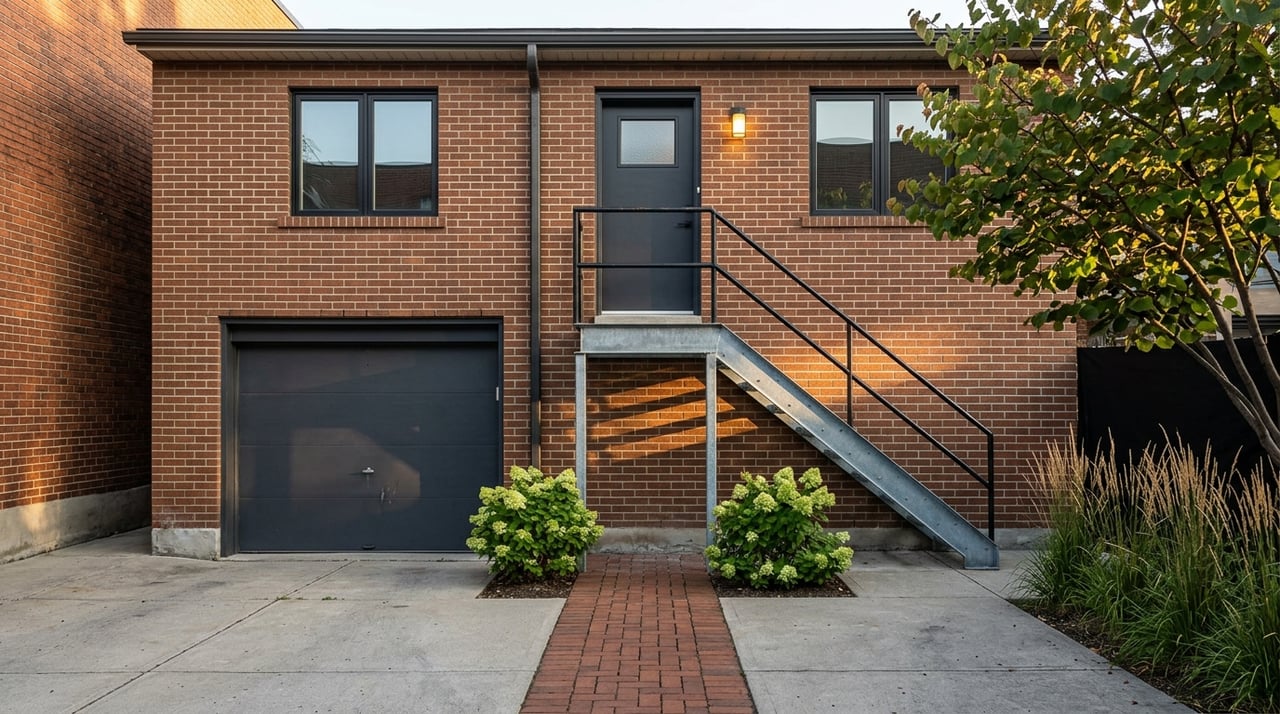
Thinking about buying a Wicker Park property with a coach house? It can look like a rare value-add play, a flexible long-term housing option, or a smart way to buy into one of Chicago’s most established neighborhood settings. But coach houses in Wicker Park are not simple backyard bonus spaces, and the difference between a great opportunity and a costly surprise often comes down to zoning, legal status, site layout, and rehab scope. If you want to evaluate these properties with more confidence, here’s what to look at first. Let’s dive in.
Why coach houses matter in Wicker Park
Wicker Park is the kind of neighborhood where coach houses make sense historically and physically. The Wicker Park District is a designated Chicago Landmark district with buildings dating from roughly 1870 to 1930, and coach houses are part of that older city pattern that grew out of the horse-and-carriage era.
Chicago’s alley system is also part of the story. The city defines an alley as a public right-of-way that gives secondary access to abutting property, and that rear access is one reason coach houses fit so naturally on older Chicago lots.
That history creates appeal, but it also creates complexity. Chicago banned new coach-house living spaces in 1957, so many existing examples are legacy structures, not newer additions built under today’s rules.
Start with legal feasibility
Before you think about finishes, layout, or rental income, you need to know whether the coach house is legal, legalizable, or restricted. In Chicago, a coach house is an accessory building with one dwelling unit, and it must remain subordinate to the main building on the lot.
That distinction matters because the city does not treat a coach house like a stand-alone home. New coach houses cannot be built before the principal building, and only one dwelling unit is allowed per coach house.
A coach-house dwelling unit also may not exceed 700 square feet. So if you are evaluating a property based on oversized expectations, your numbers may need a reset early in the process.
Key zoning rules to confirm
If you are looking at a new coach house or a major rebuild scenario in B or C zoning districts, some of the main rules are geometry-based:
- The coach house may only be established in the rear 30 feet of the lot depth
- It cannot exceed 22 feet in height
- It must leave at least 3 feet of open space along one side, unless that side abuts an alley or street
- It must maintain at least 15 feet between the main building and the coach house
- On lots under 125 feet deep, that building separation may be reduced to 10 feet through administrative adjustment
- It may be built without accessory parking
These rules make lot layout more important than many buyers expect. In many cases, site geometry matters more than raw lot size.
Rear setback and alley details matter
On a standard Chicago lot, one or two feet can change the whole deal. If the coach house sits next to a public alley, Chicago requires at least a 2-foot setback from the rear property line unless the building is at least 10 feet from the alley centerline and acceptable survey evidence is provided.
That means you should not rely on rough visual judgment from a showing. A survey and careful measurement can make the difference between a workable project and a nonstarter.
Understand RS zoning and ADU rules
If the property is in an RS zoning district, a new coach house has another layer of review. It must comply with Chicago’s ADU-allowed-area rules, and the Department of Housing must issue pre-certification before a building permit is issued.
The city also requires notice to the local alderman during that pre-certification process. For some buyers, that adds time and coordination that should be built into the timeline from the start.
If a detached house in an RS area is adding an ADU, the principal house must be owner-occupied at pre-certification. And if two or more ADUs are added after May 1, 2021, 50% must be maintained as affordable housing units for 30 years.
These are not small details. They directly affect whether your ownership plan, project scope, and long-term return still make sense.
Check rental strategy before underwriting
Many buyers assume a coach house creates easy short-term rental flexibility. In Chicago, that assumption can create a serious underwriting error.
Coach houses lawfully established after May 1, 2021 cannot be rented or otherwise offered for transient occupancy. So if you are evaluating a Wicker Park coach house opportunity, the stronger framework is long-term residential use, not short-term rental income.
For owner-occupiers and small investors, this changes the value conversation. You are buying a regulated long-term housing asset with historic appeal, not a casual hospitality play.
Review the existing coach house’s legal status
Some of the most interesting Wicker Park coach house opportunities are existing rear buildings, but older does not always mean simpler. You need to understand whether the structure has lawful dwelling status, nonconforming status, or uncertain status.
Chicago allows some older coach houses on landmark properties or within landmark districts to continue as dwelling units if the Zoning Administrator finds competent evidence they were previously legal dwellings. Outside landmark districts, a nonconforming coach house can remain occupied if it has not been continuously vacant for more than one year.
There is an important limit here: expansions are not allowed in those cases. So if your business plan depends on enlarging the structure, the property may not fit your goals even if the unit can remain occupied.
Inspect like a rehab and legalization project
A Wicker Park coach house should be evaluated more like a small rehab-and-legalization project than a cosmetic update. The main question is not whether the space feels charming. The main question is whether the structure, access, and code path support your plan.
You want to know whether the shell is sound, whether utilities can be routed cleanly, whether trades and materials can realistically reach the rear structure, and whether the existing footprint fits current alley and setback rules. Those practical constraints often drive costs faster than buyers expect.
What to inspect closely
A realistic due diligence checklist should include:
- Roof condition
- Framing condition
- Foundation performance
- Signs of moisture intrusion
- Electrical systems
- Plumbing systems
- Mechanical systems
- Fire safety issues
- Insulation needs
- Window and egress compliance
- Utility routing to the rear structure
- Alley access for labor and materials
Even when a property looks usable, hidden corrections can materially change the budget. This is where a construction-first review can protect you from paying for potential that does not pencil out.
Factor in landmark review
Wicker Park’s historic setting is part of its appeal, but it can also affect permits. If the property is in the Wicker Park District or another Chicago Landmark district, permit work that affects significant historical and architectural features must be approved through the Commission on Chicago Landmarks.
In landmark districts, the significant features are typically exterior elevations visible from the public right-of-way. That means rear-structure work can still trigger review if the facade or roofline is visible from public space.
This does not automatically kill a project. It does mean your renovation timeline, design approach, and expectations for exterior changes should be grounded in reality from day one.
Build a smarter renovation budget
A strong coach house budget should go beyond purchase price and finishes. To evaluate the opportunity clearly, break the numbers into the categories that actually drive outcomes.
Budget categories to include
- Acquisition costs
- Design and entitlement costs
- Hard construction costs
- Soft costs
- Carrying costs
- Contingency
In many coach house projects, the biggest cost drivers are not cosmetic. They are often hidden structural corrections, utility upgrades, code compliance items, and delays or revisions tied to permitting or historic review.
That is why realistic budgeting matters more than optimistic pricing. A coach house can create strong long-term value, but only when the legal path and construction scope are priced with discipline.
Spot the strongest opportunities
The best Wicker Park coach house opportunities usually share a few traits. The rear structure is already legal or clearly legalizable, the lot geometry works, alley access is usable, and the rehab scope is manageable.
These are the deals where you can tie historic character to a practical execution plan. They tend to offer the clearest path for owner-occupiers, renovation-minded buyers, and small investors who want confidence before they commit.
Red flags to take seriously
Be cautious when you see:
- Lots that are too shallow
- Rear structures too close to lot lines or the alley
- Unclear legal status for dwelling use
- Properties where major exterior changes may trigger landmark sensitivity
- Scope that depends on expansion where expansion is not allowed
- Deal math that relies on transient occupancy
None of these issues automatically ends a deal. But each one deserves careful verification before you make assumptions about value.
Why a construction-first lens helps
Coach houses are where brokerage advice and construction reality need to work together. In a neighborhood like Wicker Park, the best opportunities often look compelling on paper because of location and character, but the real question is whether the building, lot, and legal path support the vision.
That is why buyers benefit from a practical review of zoning, measurements, access, and likely rehab scope before they fall in love with the idea. When you evaluate the property through that lens, you can separate true upside from expensive uncertainty.
If you’re weighing a Wicker Park coach house purchase, sale, or value-add plan, working with an advisor who understands both neighborhood dynamics and buildability can save you time, money, and unnecessary risk. If you want a construction-forward second opinion on a specific property, connect with Marcello Navarro.
FAQs
What is a coach house in Wicker Park?
- A coach house is an accessory building on the same lot as the main building that contains one dwelling unit and remains subordinate to the principal structure.
What size can a Chicago coach house dwelling unit be?
- A coach-house dwelling unit may not exceed 700 square feet of floor area, and only one dwelling unit is allowed per coach house.
What should you check first on a Wicker Park coach house property?
- You should first confirm zoning, legal dwelling status, lot geometry, alley setbacks, and whether the existing structure fits current Chicago rules.
Can you use a Chicago coach house for short-term rental?
- Coach houses lawfully established after May 1, 2021 cannot be rented or offered for transient occupancy.
Do Wicker Park coach houses need landmark review?
- If the property is in the Wicker Park District or another Chicago Landmark district, permit work affecting significant visible exterior features may require review by the Commission on Chicago Landmarks.
What makes a strong Wicker Park coach house opportunity?
- The strongest opportunities usually combine clear legal status or legalizability, workable lot geometry, usable alley access, and a rehab scope that can be priced with confidence.