Wondering whether a Bucktown vintage home or a newer build is the better fit for your life and budget? You are not alone. In Bucktown, it is common to see worker cottages, greystones, and two-flats on one block, then newer condos and infill projects just around the corner. That mix gives you real options, but it also makes the decision more nuanced. In this guide, you will get a clear look at how vintage homes and new construction compare in Bucktown so you can weigh character, upkeep, efficiency, and long-term fit with more confidence. Let’s dive in.
Bucktown offers both old and new
Bucktown is not a one-style neighborhood. Its housing stock reflects a long history, from older small homes, churches, and flats to more recent condo and apartment development. Current neighborhood descriptions still point to that mix of vintage character and modern flair.
That balance is also visible in how the area continues to evolve. The city adopted the North Branch Framework and Design Guidelines in 2017 for a large corridor that includes nearby areas influencing Bucktown’s development pattern. More recent reporting shows ongoing infill condo and apartment projects in East Bucktown and along the North Branch corridor.
For you as a buyer, that means this is not a simple old-versus-new market. It is a neighborhood where both options are active, visible, and worth comparing on the same terms.
What counts as a vintage Bucktown home
When buyers talk about vintage homes in Bucktown, they are often comparing a few classic Chicago housing types. One is the worker’s cottage, a common style that appeared after the Great Fire of 1871. The City of Chicago describes it as a one-and-a-half-story home on a raised basement, usually with a rectangular floor plan and a front-facing gable roof.
Another key category is the Chicago two-flat or three-flat. According to the Chicago Architecture Center, these buildings make up about a quarter of the city’s housing stock, and many were built between 1900 and 1920. They typically have one apartment per floor, bay windows, and a brick or greystone façade.
Greystones often sit at the more decorative end of the vintage spectrum. They are known for white limestone façades and classical detailing. In Bucktown, these homes and flats help create the architectural texture many buyers are drawn to in the first place.
Why vintage homes feel so distinct
Vintage Bucktown homes usually stand out because they are less standardized. Floor plans can vary widely, room sizes may be less predictable, and circulation patterns often reflect how people lived decades ago rather than how many buyers live today. That individuality is part of the appeal, but it can also affect how well a home fits your day-to-day routine.
There is also a scarcity factor. The Chicago Architecture Center notes that two-flats are no longer commonly built because developers often see them as impractical. That helps explain why existing vintage properties can feel especially unique in a market where newer housing often follows more repeatable formulas.
If you love original details, masonry character, and homes that do not feel cookie-cutter, vintage stock may speak to you more strongly. But the same details that create charm can also bring added responsibility.
What to expect with vintage upkeep
Older homes often come with a wider maintenance range than newer construction. In Bucktown, that can mean future work on older materials, building systems, or layouts that need updating to match current needs. Purchase price is only one part of the equation.
Chicago’s permit rules matter here. The city requires permits for new construction, major repairs, alterations, additions, renovations, demolition, and regulated system work such as electrical, plumbing, mechanical, and gas changes. In practical terms, a meaningful rehab is often not a simple cosmetic project.
That is one reason construction insight matters when you compare homes. A property that looks manageable on the surface can involve multiple trades, a larger scope, and more time once walls are opened or systems are reviewed.
Landmark rules can affect renovation plans
Some vintage properties may have added layers of review. If a home is a designated Chicago Landmark or sits within a landmark district, the Commission on Chicago Landmarks reviews permit applications to help protect landmark qualities. The city’s rehabilitation guidance also emphasizes preserving significant features and repairing historic materials rather than replacing them when possible.
That does not mean landmarked or historically significant homes are off-limits. It simply means your renovation plan may need to work within a more defined framework. If preserving character matters to you, that may feel like a benefit. If you want a faster, more open-ended remodel, it is something to understand early.
Energy performance in older homes
Efficiency can be one of the biggest differences between vintage housing and new construction. Older homes may not meet modern expectations for insulation and air sealing. The Department of Energy notes that retrofit strategies can include drill-and-fill insulation or adding continuous insulation during re-siding, which can make energy upgrades more involved.
For a Bucktown buyer, that means a vintage home’s real cost can depend heavily on the rehab budget, not just the list price. If comfort, monthly utility performance, and lower disruption are high priorities, it is important to account for what it may take to improve an older building envelope.
This is where a construction-led review can save you from guessing. You want to know whether you are buying charm with manageable updates or charm with a major deferred-work bill attached.
What new construction looks like in Bucktown
New construction in Bucktown is not limited to one format. Recent projects include mid-size condominium buildings, smaller infill developments, and proposals with a wider range of unit counts. That gives buyers choices across price points, layouts, and maintenance expectations.
One example is Triangle Square, described as the first new-construction condominium building since the North Branch rezoning. It offers 72 for-sale units with two- and three-bedroom floor plans, along with features like open-concept layouts, a rooftop deck, a fitness center, and a dog-washing station.
Other projects reinforce the pattern. A 2023 approval at 2020 W. Webster called for a four-story building with six residential units, balconies, a rooftop deck, and a detached garage. A 2025 proposal at 2120 W. Webster included a three-story building with 12 units and a mix of studios through three-bedroom homes.
Why buyers choose new construction
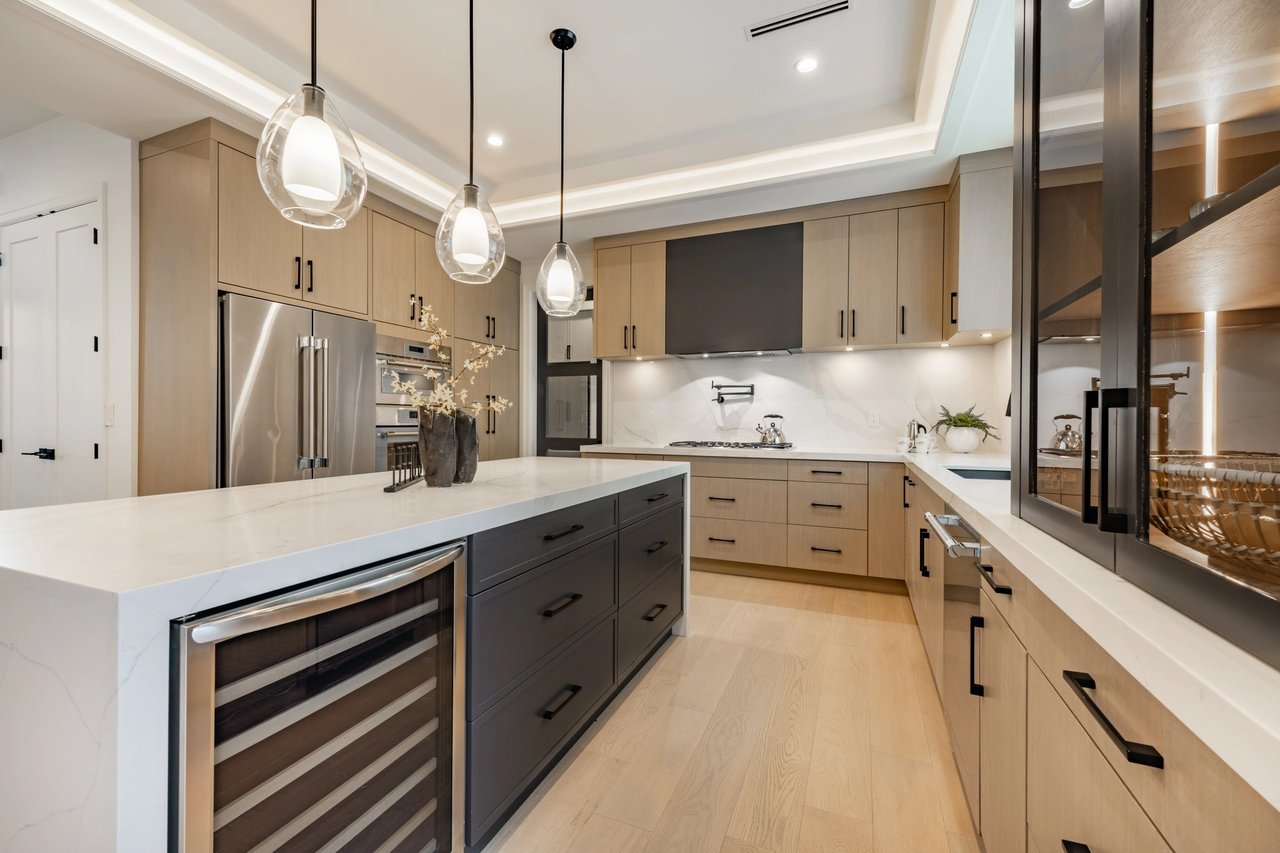
New construction usually appeals to buyers who want more predictability. Layouts tend to be more open, finishes and systems are newer, and the risk of near-term replacement work is often lower. That can make budgeting easier, especially if you prefer fewer surprises after closing.
At the Chicago market level, newer townhome projects commonly use three-story layouts with attached garages, private yards or balconies, and internal drives. While not every Bucktown project follows that model exactly, it helps show the broader benchmark many buyers are using when they compare newer attached housing.
If your goal is turnkey living, easier maintenance, and built-in modern function, new construction may line up better with how you want to live. The trade-off is that some homes can feel more standardized than Bucktown’s older housing stock.
Newer homes can still reflect Bucktown’s style
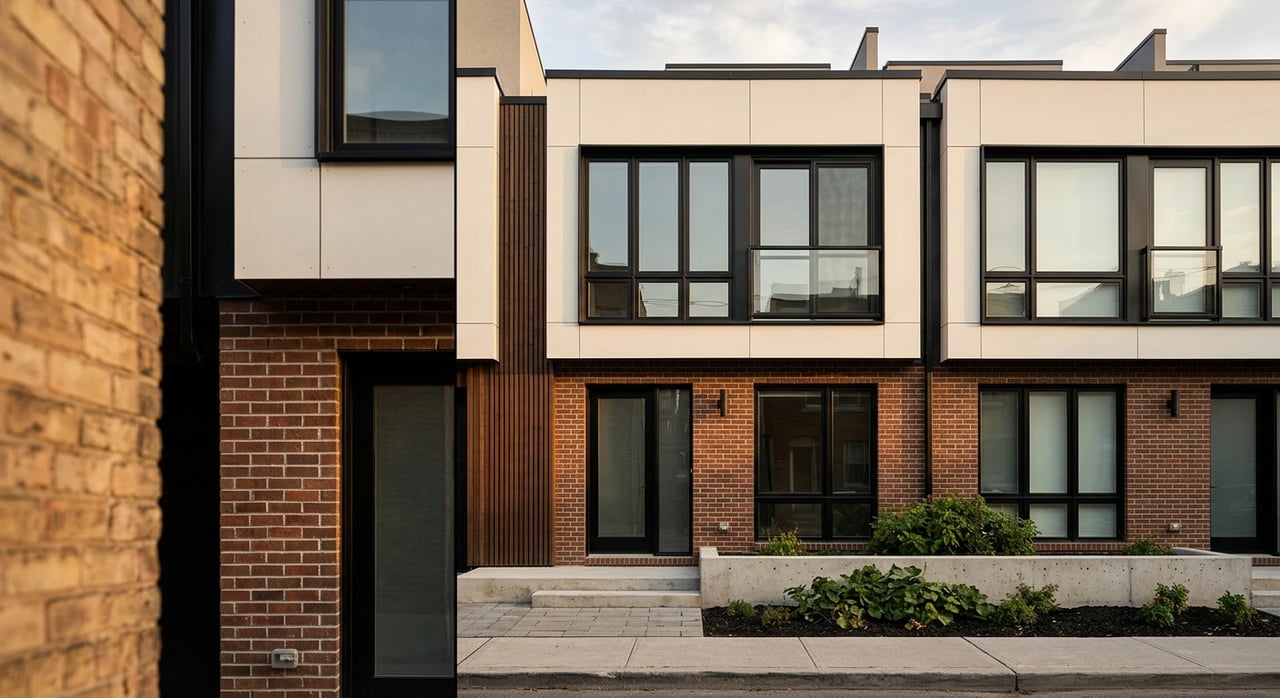
One common concern is whether a new building will feel out of place. In Bucktown, many new projects aim to look neighborhood-appropriate rather than sharply disconnected from their surroundings. That design choice helps newer homes blend more naturally into an area known for strong architectural identity.
For example, one recent Webster proposal included face brick, stone banding, a stone base, brick corbeling, and stone coping. Triangle Square was also designed to reference Bucktown’s industrial past. So while the floor plans and systems may be modern, the exterior language often borrows from established Chicago building traditions.
Energy code gives new construction an edge
Chicago’s current Energy Transformation Code applies to residential buildings and is intended to improve energy use and reduce carbon emissions over the life of buildings built or renovated under the code. For buyers, that matters because efficiency is increasingly tied to comfort, operating costs, and long-term performance.
The basic components are not mysterious. Efficient homes depend on air sealing, insulation, windows, and HVAC performance working together. ENERGY STAR also emphasizes that verified new homes are independently checked against those standards.
This does not mean every new home performs the same way. But in general, newer construction starts with a more current efficiency baseline than an older home that has not been substantially updated.
Vintage versus new: the real trade-off
The clearest way to compare Bucktown vintage homes and new construction is this: vintage usually wins on character and architectural individuality, while new construction usually wins on predictability, energy performance, and lower near-term maintenance. That is the practical trade-off most buyers are sorting through.
The right choice depends on your budget and lifestyle. If you enjoy the idea of customizing a property, preserving original features, and potentially unlocking renovation upside, a vintage home may offer more long-term satisfaction. If you want a more straightforward ownership experience, newer construction may better support your timeline and cash flow.
In Bucktown, this decision is especially useful because both sides are visible in real time. You can compare preserved worker cottages, greystones, and two-flats against modern infill condos and masonry-clad newer buildings without leaving the neighborhood.
How to decide which fits you
Start with how you want to live in the home, not just how the home looks online. A vintage property may offer more character and a stronger sense of individuality, but it may also ask more from you in repairs, updates, and patience. A newer home may simplify ownership, but it may not deliver the same architectural personality.
Then look closely at your real budget. With older homes, you may need room for system upgrades, insulation work, permit-related costs, and specialist trades. With new construction, your budget may go more toward purchase price and monthly carrying costs rather than immediate improvements.
Finally, think about your tolerance for uncertainty. Some buyers are energized by renovation potential. Others want a home that feels settled from day one. Neither approach is better. The key is matching the property to your comfort level and priorities.
If you are comparing Bucktown homes and want a practical read on renovation scope, building condition, and real trade-offs, Marcello Navarro can help you sort through the options with a construction-forward lens.
FAQs
What is the main difference between vintage homes and new construction in Bucktown?
- Vintage Bucktown homes usually offer more architectural character and individuality, while new construction usually offers more predictable layouts, stronger energy performance, and lower near-term maintenance.
What types of vintage homes are common in Bucktown?
- Common vintage housing types in Bucktown include worker’s cottages, two-flats, three-flats, and greystones, each with distinct layouts and exterior materials tied to Chicago’s building history.
What should buyers know about renovating an older Bucktown home?
- Chicago requires permits for major repairs, alterations, additions, renovations, demolition, and system work like plumbing, electrical, mechanical, and gas changes, so an older-home rehab often involves more scope than buyers expect.
Can landmark rules affect a vintage home purchase in Bucktown?
- Yes. If a property is a designated Chicago Landmark or is located in a landmark district, permit applications may be reviewed to protect significant historic features.
Why do some buyers prefer new construction in Bucktown?
- Many buyers choose new construction for open-concept layouts, newer systems, lower near-term repair risk, and homes built under Chicago’s current energy code.
Does new construction in Bucktown still match the neighborhood’s look?
- Often, yes. Recent Bucktown projects have used materials and design details like face brick, stone banding, and masonry-inspired façades to better reflect the neighborhood context.